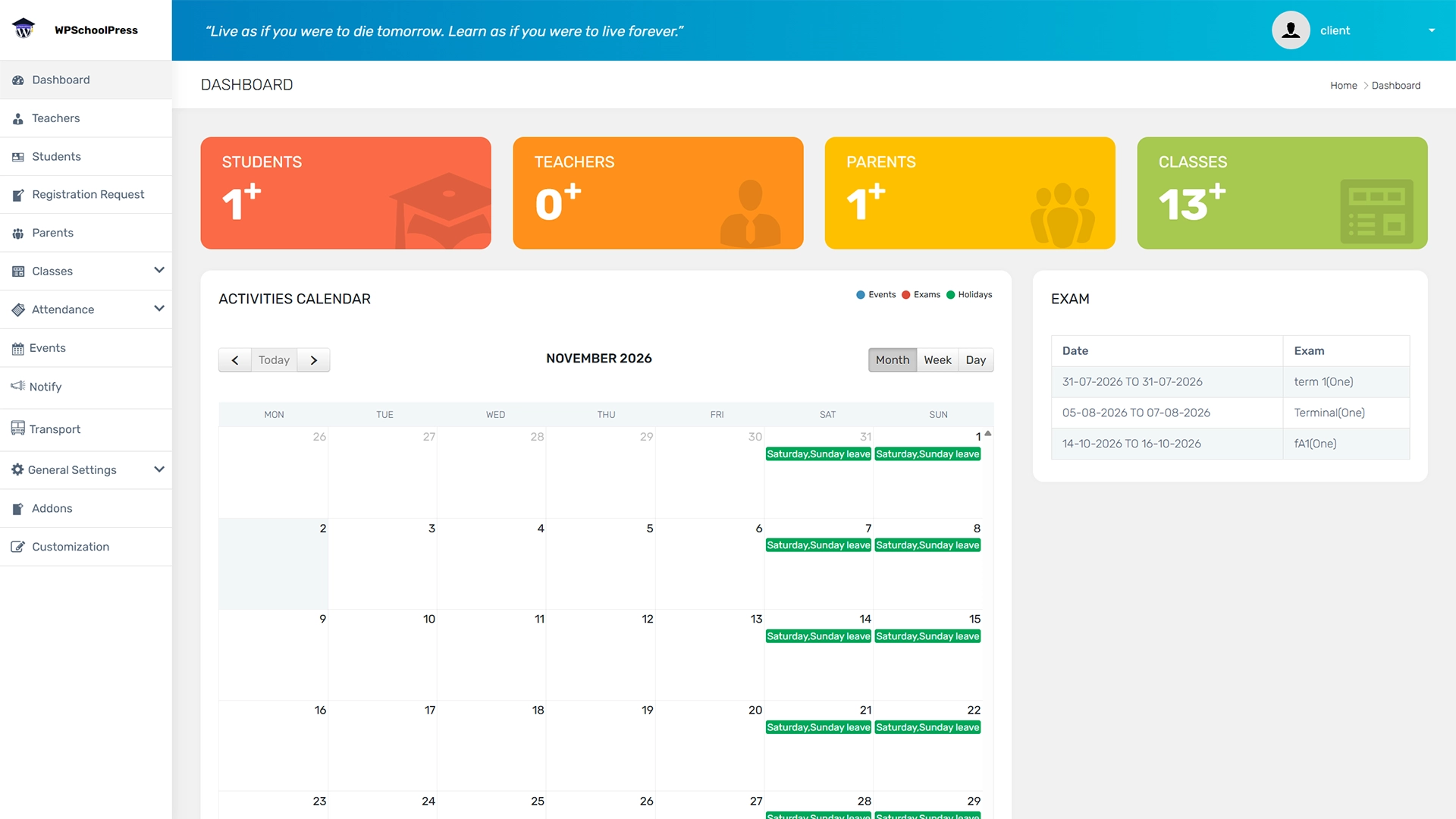
Student Management Systems (SMS) are revolutionising the way schools are run by greatly decreasing the amount of time taken by teachers on tedious administrative processes. Automatic collection of attendance and immediate grading can be only some of the useful tools that greatly facilitate daily routine and exclude hand-made work. There is no longer a wall of paper, or piles of paper, or endless keyboard shortcuts: grading, reporting, and communication with parents all integrated into a single, harmonious dashboard.
This productivity tool can not only increase the productivity of the teacher, but it also enables them to concentrate better on lesson planning and the interaction with their students. The student management system is not optional in the present dynamic learning culture of high-quality teaching and efficient teaching, but it is a condition of effective and efficient teaching.
Key Takeaways
Today, teachers are under an increasing administrative load that takes away instructional time. Tasks such as attendance, assignment grading, student records, and parent communications usually take a few hours a week. It is this continual shuffle between spreadsheets, mail and paper that causes stress and provides minimal time to prepare classrooms or interact with students. Admin overload not only diminishes the effectiveness of teaching but also leads to teacher burnout. Educators without the assistance of a digital tool such as a student management system are caught in a temporal time trap, relying more on paperwork than spending time on what is important: educating students.
Student Management System (SMS) is a software which is used by schools to manage, store and organise all the information about students in one place.
It streamlines everything from attendance and grading to communication and reporting.
Instead of juggling multiple tools or paper files, schools can track and manage student data with just a few clicks.
One of the most essential student management system features and functions is student data management.
This includes storing contact info, academic records, behavior logs, medical data, and more—all in a secure, searchable format.
Another key feature?
Teachers have the ability to enter grades and allow the system to compute averages, print out report cards and even to give parents or administrators performance analytics.
As for the number of student attendance management system features, many have biometric sign-in, QR code scanning and live attendance dashboards these days.
Communication facilities that enable the educators to communicate or send messages or alerts to the parents even on the dashboard also exist in most of the systems.
That saves time and ensures nothing gets lost in an email inbox.
Some systems even support SMS notifications or mobile app alerts.
By 2025, a student management system is no longer a tool, but it is the digital infrastructure of any efficient school.
It enables teachers, time-saving, and student outcomes same dashborad by its ability to reduce data, communication, and reporting facilities to a single roof.
Teachers are able to document the attendance of every class per day, include the cause of absence, and access historical records. In their dashboard, students and parents can monitor attendance history.
Teachers can create exams, assign grades or marks per subject, and use CSV import for bulk uploads. Students and parents can view and print grade sheets.
Easily create classes and subjects, assign students and teachers, manage class groups, record attendance by subject, and send group messages.
Admins are able to make class schedules, school calendars and events that can be seen by teachers, students and parents. Announcements are made through emails or through SMS.
Send email notifications to all or specific groups for emergency holidays, upcoming events, newsletters, or school activity updates.
Add and manage transport details including routes, driver info, and public/private transport options for students, parents, and staff.
Allow students and teachers to self-register from the front end for school or class enrollment—ideal for coaching institutes.
Easily customizable and developer-friendly core code for adding new features or modifying existing ones.
Quick, simple installation like any WordPress plugin, making the system functional within minutes.
Switch seamlessly between the WPSchoolPress dashboard and the WordPress dashboard in one click.
Enhance the core plugin with premium add-ons to meet unique school management requirements.
Get tailor-made features or even a fully personalized version of WPSchoolPress to suit your specific organizational needs.
One of the biggest advantages of a student management system (SMS) is how much time it saves teachers every single week.
Instead of juggling spreadsheets, paper files, and manual grading, teachers get one centralized platform to manage everything — fast.
According to recent EdTech surveys, schools using modern student data platforms report teachers saving 4–6 hours per week on average.
That’s nearly a full workday reclaimed.
So where does the time savings come from?
Here’s how:
Many schools report that tasks that used to take 20–30 minutes now take just 5.
In fact, one study by Education Data Systems found that schools with SMS tools saw a 60% reduction in administrative workload for teaching staff.
The result?
And a much more efficient school day.
Student management systems don’t just save time — they save money too.
And that cost savings often circles back to help teachers.
For example, with everything stored digitally, schools cut down on paper, printing, and photocopying.
No more printing attendance sheets, gradebooks, or report cards.
That’s not just a financial win — it also means teachers aren’t wasting time waiting for printers or chasing lost forms.
Not to mention, the majority of the current systems are cloud-based and very intuitive: it results in fewer IT support calls.
When a system is functioning optimally, educators are not left waiting around for a technology fix or attempting to resolve issues within the lesson period.
That’s more time in the classroom and less time troubleshooting.
Over time, these indirect time-savers really add up — creating a smoother, more efficient teaching environment for everyone.
And the bonus?
Schools stretch their budgets further without compromising on quality or support.
Student management systems bring powerful features that simplify school operations — from attendance tracking and grade automation to communication and scheduling.
But the biggest win?
The teachers will save hours a week, avoid busywork and paperwork.
Teachers do not have to spend so much time on administrative work and assignments since they have fewer administrative problems due to fewer technological challenges, less printing, and the availability of data real-time.
Explain features like grading, attendance, transportation, reporting.
The student management system saves time and automates tasks.
No, but they complement each other.
Yes, with encryption and user access controls.

Hi, I’m Alex Smith, a Subject Matter Expert at WPSchoolPress. For over six years, I’ve helped schools digitize operations like attendance, fee management, and academic workflows. I’m passionate about using processes automation and smart technology to make school management faster, more efficient, and student-focused. Through my blog, I share practical tips and automation strategies to help schools simplify and streamline their workflows.
Explore all the features of WPSchoolPress like attendance management, student grading system, etc by trying it’s live demo

April 2, 2026

March 24, 2026

October 13, 2025

September 22, 2025

September 11, 2025
Stay updated with our latest news & updates. We promise not to spam!
Share a few details about your school and our team will set up your WPSchoolPress website for you.